

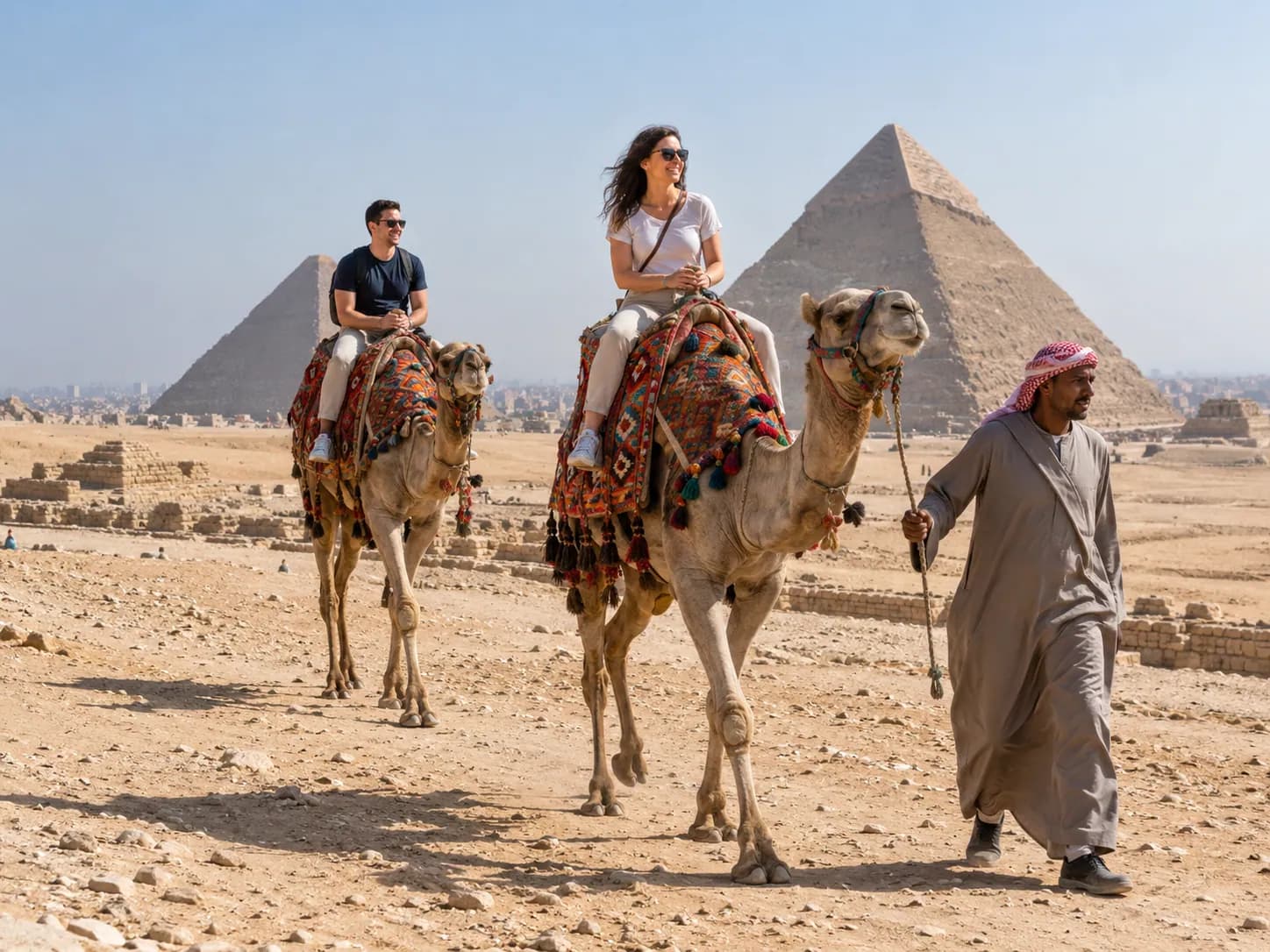
The Giza pyramids are on the western edge of Cairo, 15–20 km from the centre. Arrive at opening time, allow three to four hours for the three pyramids, the panorama and the Great Sphinx, and visit between October and April if you can. Entry to the inside of the Great Pyramid is a separate ticket, and the Grand Egyptian Museum is about 2 km away.
The pyramids stand on a limestone plateau where the city ends and the desert begins. It is one of the most visited places on earth, and still worth every minute — especially if you come early, know where you are going, and leave time to stand still.
What you will see
The Great Pyramid of Khufu, built around 2560 BC, is the oldest and largest of the three, and the only one of the Seven Wonders of the Ancient World still standing. It was the tallest structure built by people for thousands of years.
The Pyramid of Khafre, Khufu’s son, looks taller because it stands on higher ground, and it still has some of its smooth outer casing at the top. The Pyramid of Menkaure is the smallest of the three, with three small queens’ pyramids beside it.
The Great Sphinx, carved from the bedrock of the plateau, lies below Khafre’s pyramid next to his Valley Temple — one of the best-preserved Old Kingdom temples, built from huge granite blocks.
A good route around the plateau
Start at the Great Pyramid while it is quiet, then drive or walk past Khafre and Menkaure to the panorama viewpoint in the desert, where all three pyramids line up. This is where the classic photos are taken and where short camel rides start. Finish down at the Sphinx and the Valley Temple. On foot the whole loop is several kilometres in the sun, so most people use a car between the stops.
Going inside a pyramid
You can go inside the Great Pyramid with an extra ticket. The passage up to the King’s Chamber is narrow, steep and warm, and the chamber itself is a bare granite room — the experience is the climb, not what you see. Skip it if you dislike tight spaces. The smaller pyramids sometimes open on a separate ticket, and their passages are shorter.
Tips for a calm visit
Come at opening time: the light is softer, the heat lower and the coach groups have not arrived. From May to September this matters even more.
Agree prices before any ride or photo. Camel and horse owners on the plateau are persistent; a firm, friendly “no, thank you” works. If you want a camel ride, take it from the panorama with an agreed price, or book a tour that includes it.
Bring a hat, sunscreen, water and closed shoes — the ground is sand and loose stone. There is little shade.
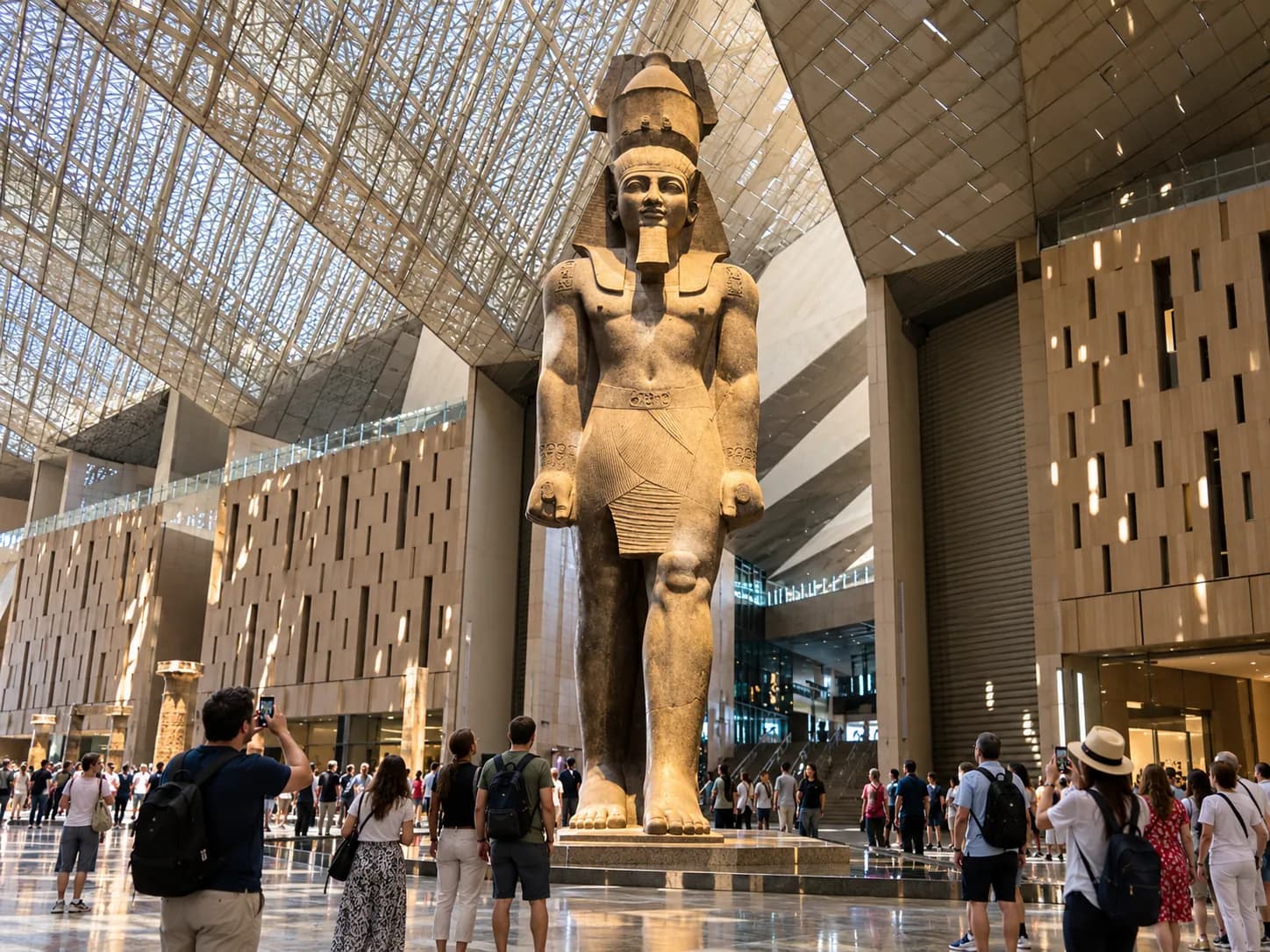
Add the museum: the Grand Egyptian Museum is about 2 km away, so the pyramids in the morning and the museum after lunch makes an excellent day. In the evening, the Sound & Light Show tells the story of the plateau with the pyramids lit up.
Questions people ask
Three to four hours covers the three pyramids, the panorama, the Sphinx and the Valley Temple at an easy pace. Add an hour if you go inside the Great Pyramid.
At opening time in the morning, between October and April. Late afternoon is also good for the light, and cooler in summer.
It is a memorable climb through a narrow, steep passage to a bare granite chamber. Go if you are curious and comfortable in tight, warm spaces; skip it if not.
About 2 km, so the two combine easily in one day.
Yes, it is a great family visit. Bring shade and water, and keep the day short in hot months; our private pyramid tour welcomes children from 4.