Siwa is an oasis in Egypt’s Western Desert, about 50 km from the Libyan border and roughly 750 km by road from Cairo — around nine hours via Alexandria and Marsa Matruh. Go between October and April for the springs, the salt lakes, the mud-brick fortress of Shali and the dunes of the Great Sand Sea. Plan four days or more.
Siwa is the most remote of Egypt’s inhabited oases and the one that feels least like anywhere else in the country. Its people have their own language, Siwi, an Amazigh (Berber) language; its gardens grow dates and olives around hundreds of springs; and on its southern edge the dunes of the Great Sand Sea begin.
Where is Siwa?
Siwa lies in a depression in the far west of Egypt’s Western Desert, close to the border with Libya and about 300 km south of the Mediterranean town of Marsa Matruh. Much of the oasis sits below sea level, which is why water rises so easily here: springs feed the palm gardens, and the overflow collects in wide salt lakes.
The oasis is roughly 80 km long. Siwa Town is in the middle, built around the ruins of the old fortress of Shali; smaller villages and gardens spread east and west along the lakes.
How to get to Siwa
There are no regular passenger flights, so almost everyone arrives by road. From Cairo the drive is about 750 km: up to the coast near Alexandria, west along the Mediterranean to Marsa Matruh, then south through the desert to Siwa. It takes around nine hours with stops; we break it with lunch in Marsa Matruh. Public buses also run from Cairo and Alexandria via Marsa Matruh.
Carry your passport: there are police checkpoints on the road, and they will ask for it. Trips into the Great Sand Sea need a permit, which we arrange with a copy of your passport about ten days before you travel.
What to see in Siwa
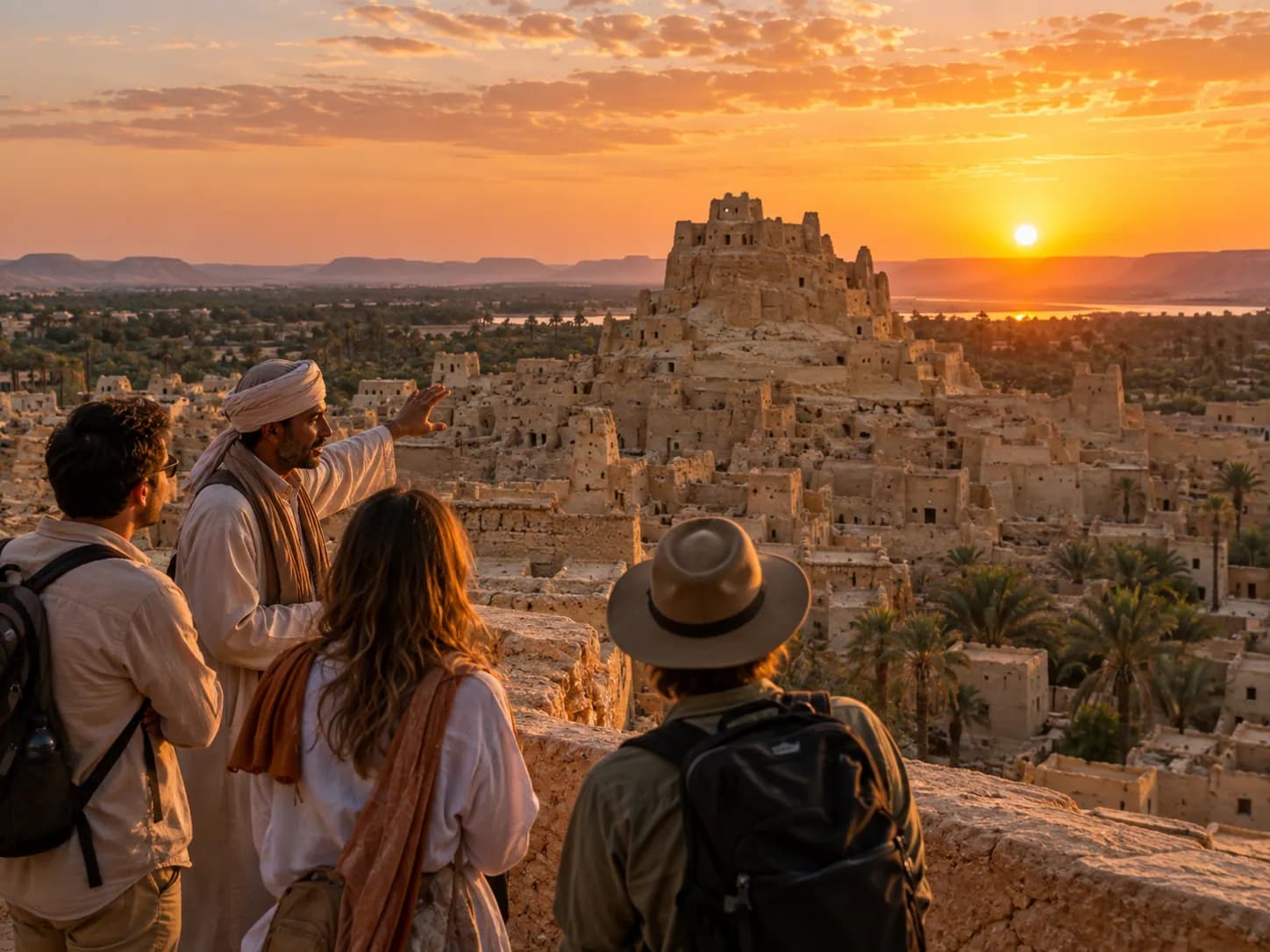
Shali fortress: the old town of Siwa, a maze of houses built from kershef, a mix of salty mud and rock. Heavy rain in the 20th century melted much of it, and what is left looks sculpted rather than built. Climb it for sunset over the palms.
The Temple of the Oracle of Amun at Aghurmi: the oracle Alexander the Great travelled across the desert to consult in 331 BC. The temple stands on a rock above the village ruins, with a wide view over the oasis.
Gebel al-Mawta, the Mountain of the Dead: a small hill north of town honeycombed with rock tombs, some with painted walls.
Cleopatra spring: a round stone pool fed by a warm spring, where people swim all year. There are many more springs in the gardens; some are warm, some cold. Swim in modest clothes — Siwa is conservative.
Gardens and bicycles: the easiest way to see Siwa is slowly, by bicycle along the garden lanes, stopping for tea and dates.
The salt lakes
Lake Siwa, west of town, is the largest of the oasis lakes, with Lake Aghurmi to the east. Around them, salt is mined from shallow pools, and the flooded pits turn a bright turquoise. The water is so salty you float without trying. Bring fresh water to rinse off and keep it out of your eyes.
The Great Sand Sea
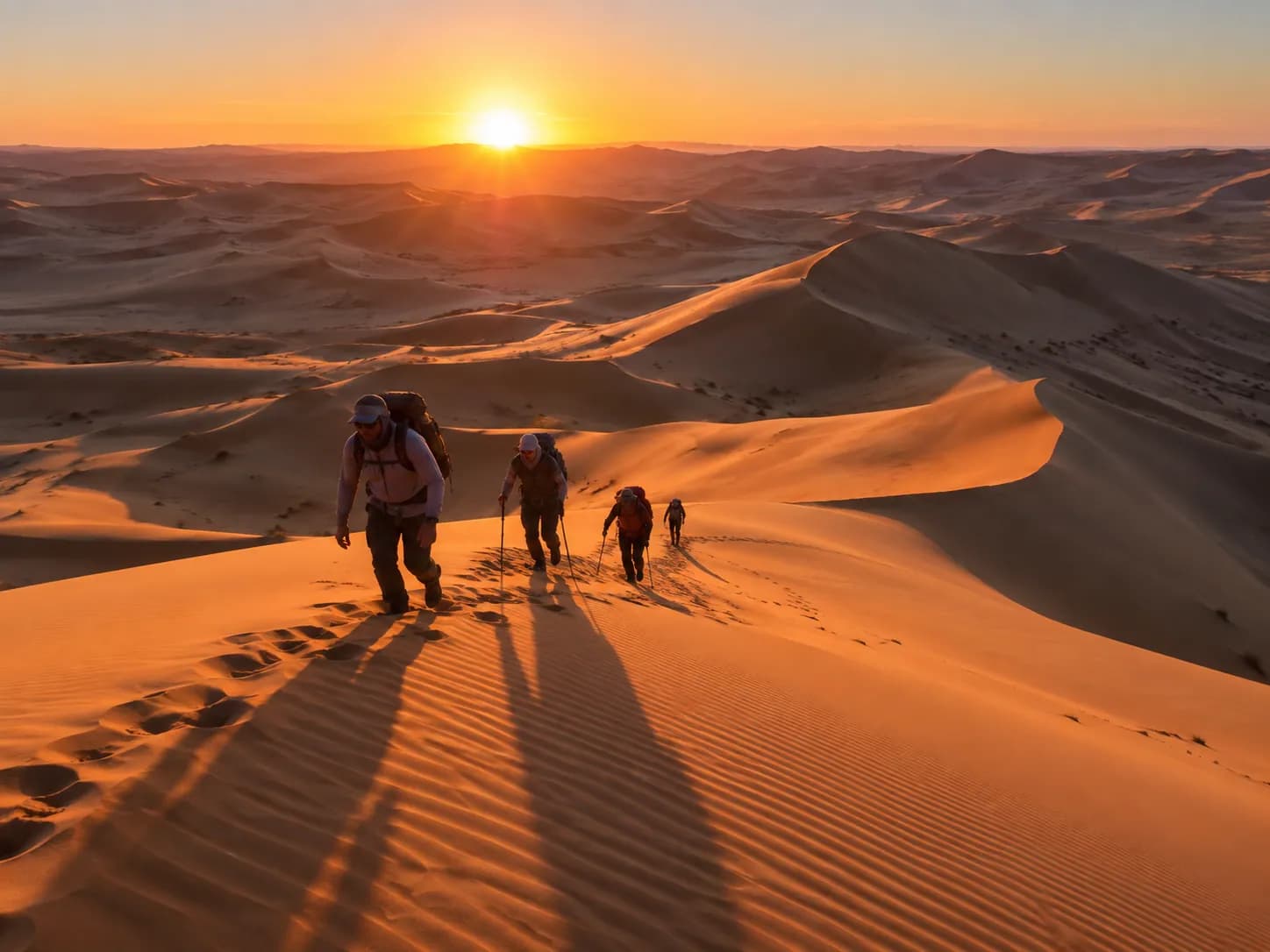
South and west of Siwa begins the Great Sand Sea, one of the largest dune fields on earth, stretching across the border into Libya. Even a half day brings you to hot and cold springs in the sand, such as Bir Wahed, and sunset from a dune ridge. Longer crossings need a permit and two vehicles; we never go into the Sand Sea with one car.
When to go
Questions people ask
In the far west of Egypt’s Western Desert, about 50 km from the Libyan border and 300 km south of Marsa Matruh on the Mediterranean coast.
About 750 km by road, or around nine hours’ driving with stops, via Alexandria and Marsa Matruh.
At least four days from Cairo: two for the drive there and back, and two in the oasis. Five or more lets you add a night in the Great Sand Sea.
Yes, in the turquoise salt pools around the lakes you float without effort. Rinse with fresh water afterwards and keep the water away from your eyes.
Siwa is a quiet, welcoming town. Travel with your passport for the road checkpoints, dress modestly, and go into the Sand Sea only with a licensed operator, a permit and two vehicles.
No. The White Desert is about 500 km from Cairo near Farafra; Siwa is further west, near Libya. See our comparison of the two.